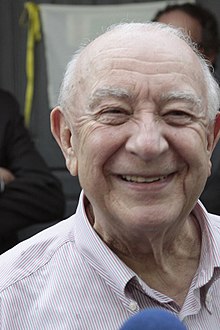
Eduardo Escorel de Morais (né en 1945), plus connu sous le nom d’Eduardo Escorel, est un monteur et réalisateur brésilien. Il a fait ses débuts en tant que monteur sur Le prêtre et la fille de Joaquim Pedro de Andrade (1965). Avec son premier long métrage, Lição de Amor, il remporte le prix du meilleur réalisateur au Festival du film de Gramado en 1976. Il a également reçu le prix du meilleur réalisateur pour son deuxième film, Ato de Violência, cette fois au Festival du film de Brasilia en 1980. Il a remporté le prix du meilleur montage pour Guerra Conjugal et O Chamado de Deus respectivement au Festival du film de Brasília en 1974 et 2000, et pour Dois Perdidos Numa Noite Suja au Festival du film de Gramado en 2002.
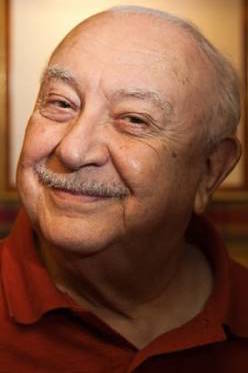
Sérgio Mamberti was born in Santos, São Paulo. ( September 3, 2021 – unfortunately passed away). He is a graduate of the School of Dramatic Arts of São Paulo, and has been a playwright for more than 50 years. He is brother of the deceased actor Cláudio Mamberti.
Affiliated to the Workers’ Party (PT), Sérgio occupied during the Lula Government several positions within the Brazilian Ministry of Culture:Secretary of Music and Performing Arts. Affiliated to the PT, Mamberti took a stand against the impeachment process of Dilma Rousseff . In 2018, he played his character Dr. Victor together with actors Pascoal da Conceição (Dr. Abobrinha) and Eduardo Silva (Bongô) to ask for votes from the then PT candidate Fernando Haddad . Also that year, he protested against the arrest of President Lula participating in the Lula Livre movement .
After the play in 1963, he joined the theater group Decision, along with names like Abumjara, Glauce Rocha and Plínio Marcos . For the group he participated in the play O Balcão de Jean Genet which earned him the Governor Award of the State of São Paulo, in the category ‘best supporting actor’.
In the 1980s, he played Galeno Sampaio in Rede Globo ‘s soap opera Brilhante . In 1984, he played King Claude in the play Hamlet , by the Englishman William Shakespeare organized by Marco Aurélio. In the same year, Argan lived in the play Tartufo , by Molière, sharing the play with Paulo Autran , under the direction of José Possi Neto . In 1998, he lived one of his most striking characters Eugênio , homosexual butler of Celina ( Nathália Timberg ), in the Vale Tudo deGilberto Braga .
Still in the 1980s, he was one of the founders of the Workers’ Party (PT) of whom he effectively participated in the process.
In the 1990s, he lived one of his most memorable characters Dr. Victor in the juvenile program Castelo Ra-Tim-Bum of TV Cultura .
After the election of Luiz Inácio Lula da Silva in 2002, Sérgio participated in the cultural part of the government, holding positions and participating in councils.
In 2013, lived the villain Dionísio in the soap opera Flor do Caribe . In 2016, he made his debut in streaming services in the 3% series produced by Netflix .
In 2017, he was honored at the São Paulo Legislative Assembly (ALESP) on the actor’s day. In 2018, he won the APCA Critics Grand Prize .
In 2019, it gained prominence in the play ‘The Golden Egg’ which tells the story of Jews who were forced to kill other Jews in Nazi Germany .
Filmography
Reference in acting, Mamberti is remembered for having represented many characters with strong personality. Among his most important and most remembered works by the public, it is important to highlight the cult cupbearer Eugênio de Vale Tudo , the sweet and wise Dr. Victor from the children’s program Castelo Rá-Tim-Bum and, more recently, the Nazi executioner Dionísio Albuquerque de Flor the Caribbean . In addition, he performed brilliantly in films , series , miniseries and other specials.
Awards and nominations
In 1962, he won the Moracy do Val award from the newspaper Ultima Hora in the category ‘revelation actor’ for the show Antígone – América. In 1964, he received the ‘Saci Award’ for Theater, which was organized by the newspaper O Estado de S. Paulo in the category ‘Best Supporting Actor’ for the play O Inoportuno.
In 1969, he received the ‘ Governor of the State of SP Award ‘ in the category ‘Best supporting actor’ for his performance in the play O Balcão. In the following decade he received more awards such as the Molière Prize in the category ‘Best actor’ in 1975 for the play Réveillon . In the previous year, Mamberti had been nominated for the same award in the same category for the play The Game of Power. Also play Réveillon won the category ‘best actor’ of the Governor Award of the State of SP, the APCA Award – Theater / São Paulo Association of Art Critics – SP and Veja SP Magazine .
As a director in 1982, he received the award for ‘Best show’ for his play Coração na Boca in an award ceremony in Rio de Janeiro . In 1989 he won the category of ‘Best Supporting Actor’ for the soap opera Vale Tudo in which he played Eugênio.
In the 1990s, in 1995, he won the Mambembe Award for ‘best supporting actor’ for the show Pérola. The following year, he won the Sharp Award for ‘best actor’ also for the play Pérola. In 1997, he won the APETESP Award for ‘best actor’ also for Pearl.
In 1998, he won the International Lumière Award. He also received the ‘Patrimônio de Bauru’ award from the municipality of the interior of the state of São Paulo.
In 2008, it received the highest cultural level award in the country Order of Cultural Merit (WTO).
In 2018, he received the APCA Critical Grand Prix .
Sérgio Mamberti resgata histórias de sua vida em autobiografia
O renomado ator, diretor, produtor e artista plástico, Sérgio Mamberti é o convidado desta semana no Fórum Sindical. Com personagens marcantes, Mamberti sempre se reinventou e transformou a arte brasileira. Sua carreira de mais de 50 anos no teatro, cinema e televisão se funde com a história da arte e da política brasileira. Agora, octogenário, escreve sua autobiografia em parceria com o jornalista Dirceu Alves Jr: “Sergio Mamberti: senhor do meu tempo”, publicada pelo SESC. Participam: o jornalista Altamiro Borges e Rubinho Giaquinto.

 Art * Music* Architecture * Sciences * Cinema * Theater * Cirque * Forain *