Entre 1965 e 1970, Milton Machado da Silva cursa arquitetura e urbanismo na Faculdade de Arquitetura e Urbanismo da Universidade Federal do Rio de Janeiro – FAU/UFRJ. Em 1969, participa da 10ª Bienal Internacional de São Paulo, e conquista, com sua equipe, medalha de prata no Concurso Internacional de Escolas de Arquitetura. Realiza sua primeira individual em 1975, na Galeria Maison de France, no Rio de Janeiro. Na mesma cidade, leciona no Centro de Arquitetura e Artes da Universidade Santa Úrsula, entre 1979 e 1994, e na Escola de Artes Visuais do Parque Lage – EAV/Parque Lage, de 1983 a 1994. Obtém título de mestre em planejamento urbano e regional pela UFRJ em 1985. Muda-se para Londres, em 1994, onde inicia doutorado em artes visuais no Goldsmiths College University of London, concluído em 2000. Volta ao Brasil em 2001 e, em 2002, passa a lecionar história e teoria da arte na Escola de Belas Artes da Universidade Federal do Rio de Janeiro.
Em seus primeiros trabalhos, majoritariamente desenhos realizados durante o período da ditadura, Milton Machado usava sua formação em arquitetura para criar projetos e relatos aparentemente lógicos que, na realidade, eram fictícios e inviáveis. Ao longo das décadas seguintes, o artista aumentou progressivamente a escala de sua produção e ampliou a diversidade dos gêneros utilizados, passando a incluir objetos, esculturas, vídeo, fotografia e grandes instalações. Ainda assim, continua explorando a tensão produzida pelo questionamento dos modelos de conhecimento científico que resulta de suas indagações artísticas.
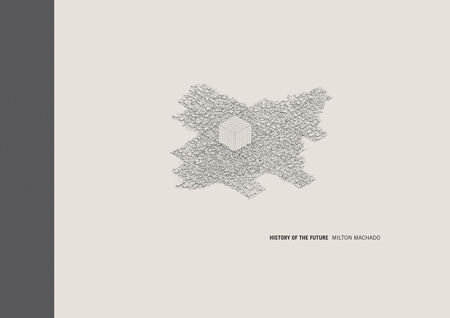
History of the Future is the first publication on one of Brazil’s foremost contemporary conceptual artists, Milton Machado (born 1947). For more than 30 years, Machado has been designing and constructing a utopian world, titled History of the Future, which he illustrates in sketches, drawings, writings, sculptures and installations.
Paulo Herkenhoff (born 1949) is an independent curator and critic. From 2003–2006, he was director of the Museu Nacional de Belas Artes, Rio de Janeiro. Previously Herkenhoff was adjunct curator in the Department of Painting and Sculpture at Museum of Modern Art, New York (1999–2002), and chief curator of Museu de Arte Moderna do Rio de Janeiro, Rio de Janeiro (1985–1990). He was also artistic director of the 1998 24th São Paulo Biennale, São Paulo (1997–1999), and curated the Brazilian Pavilion at the 47th Venice Biennale, Venice, 1997. Herkenhoff recently co-curated Brasil: desFocos (O Olho de Fora), Paço das Artes, São Paulo, 2008 and contributed to the publication Psycho Buildings: Artists Take on Architecture (2008). He has also published texts on artists such as Raul Mourão (2007); Guillermo Kuitca (2006); Rebecca Horn (2005); Julião Sarmento (2004); and Louise Bourgeois (2003). Herkenhoff lives and works in Rio de Janeiro.
Fruto das transformações culturais que têm lugar no período após a II Guerra Mundial (1939-1945), e que entre nós se traduz no crescimento das cidades e na diversificação de seus equipamentos culturais, o Museu de Arte Moderna, criado em 1948, no Rio de Janeiro, acompanha o modelo do Museum of Modern Art – MoMA [Museu de Arte Moderna], em Nova York (1929), do mesmo modo que o Museu de Arte Moderna de São Paulo – MAM/SP (1948). Um “museu vivo”, com exposições, música, teatro e cinema, além de debates: eis o intuito central da instituição, presidida pelo colecionador e industrial Raymundo Ottoni de Castro Maya (1894 – 1968). As diferenças mais evidentes entre o Museu de Arte Moderna do Rio de Janeiro e o de São Paulo parecem ser a abertura do museu carioca às artes aplicadas, sobretudo ao design e ao desenho industrial, e sua vocação educativa, que se concretiza por um serviço de biblioteca atuante (a cargo da crítica literária Lúcia Miguel Pereira) e por ateliês abertos ao público. Diversos profissionais são convidados para implantar as atividades do museu: Candido Portinari (1903 – 1962), pintura; Bruno Giorgi (1905 – 1993), escultura; Alcides Miranda (1909 – 2001), arquitetura; Luís Heitor (1905 – 1992), música; Santa Rosa (1909 – 1956), teatro; e Luís Roberto Assumpção Araújo, cinema. O museu funciona inicialmente em salas cedidas pelo Banco Boa Vista, na praça Pio X, passando em seguida para um espaço improvisado entre os pilotis do prédio do Ministério da Educação e Saúde, onde é aberta ao público a mostra Pintura Européia Contemporânea (janeiro de 1949). Das 32 obras apresentadas nesta exposição, 12 irão compor o acervo do museu, que contará em seguida com doações de Raul Bopp (1898 – 1984), Marques Rabelo e Oscar Niemeyer (1907), entre muitos outros.
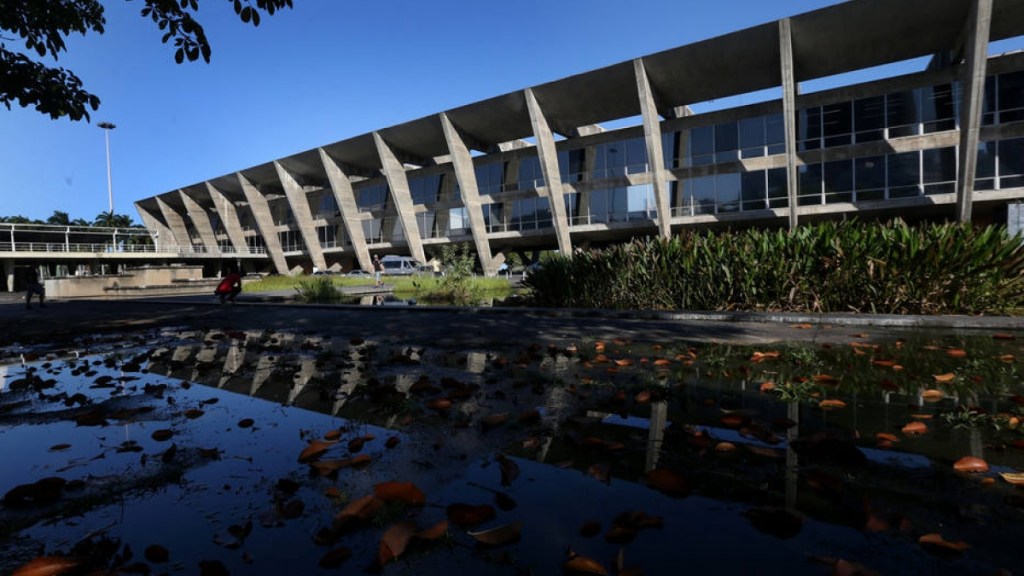
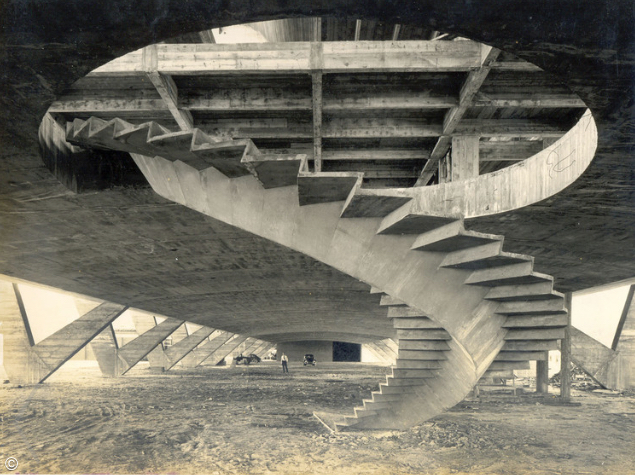
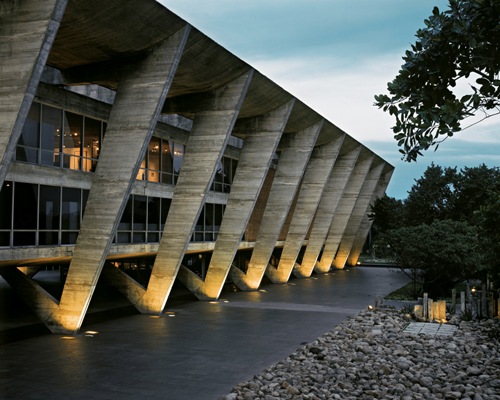
O ano de 1952 marca uma nova fase do museu, inaugurada com a exposição dos artistas premiados na 1ª Bienal Internacional de São Paulo (o que ocorrerá, a partir daí, regularmente) e com a ampliação do acervo, graças ao comando da sra. Niomar Moniz Sodré, então diretora executiva, cujo marido, Paulo Bittencourt é proprietário e diretor do jornal Correio da Manhã. O acervo do MAM – composto até então por quatro obras doadas pela Bienal, por uma pequena doação do MoMA e por contribuições particulares de artistas e colecionadores -, passa a contar nesse momento com obras de artistas estrangeiros adquiridas na Europa como André Lhote (1885 – 1962), Yves Tanguy (1900 – 1955), Georges Mathieu (1921), Fernand Léger (1881 – 1955), Alberto Giacometti (1901 – 1966), entre outros. Dentre os artistas nacionais, além de Portinari, Di Cavalcanti (1897 – 1976), Lasar Segall (1891 – 1957) e Guignard (1896 – 1962), o acervo do MAM se distingue por possuir uma expressiva coleção de Oswaldo Goeldi (1895 – 1961), com desenhos e gravuras. É Niomar quem convida o arquiteto Affonso Reidy (1909 – 1964) para projetar uma nova sede para o museu, em área de 40 mil metros quadrados doada pela prefeitura do Rio, no aterro do Flamengo, com projeto paisagístico de Burle Marx (1909 – 1994). As obras são iniciadas em 1954 e inauguradas em diferentes momentos: o Bloco-Escola, em 1958; o Bloco de Exposições, em 1967 (com mostra de Lasar Segall) e o Bloco-Teatro, inacabado. O projeto de Reidy segue as sugestões do racionalismo arquitetônico que orientam seus diversos trabalhos. No caso do MAM, especificamente, cabe destacar o emprego da estrutura vazada e transparente, a planta livre do espaço de exposições (que prevê a flexibilidade da museografia) e a atenção concedida à iluminação.
En 1924, Bardi déménagea à Milan et se maria avec Gemma Tortarolo. Le couple eut deux filles, Elisa et Fiorella. Il était à Milan, lorsqu’il commença à travailler comme marchand et critique d’art, avec l’acquisition de Galleria dell’Esame. En 1929 il devint directeur de la Galleria d’Arte di Roma et déménagea à la capitale. Trois ans plu tard, il s’installa à Rome et dirigea la galerie d’art de Rome financée par le Syndicat National Fasciste des Beaux-Arts.
Il fit escale la première fois au Brésil en se rendant à une exposition à Buenos Aires. Après la seconde guerre mondiale, Bardi rencontra l’architecte Lina Bo au Studio d’Arte Palma, à Rome, où tous deux travaillaient. Bardi divorça et se remaria avec Lina en 1946. La même année, comme beaucoup de personnalités liées au régime fasciste, le couple émigra pour l’Amérique du Sud et s’installa au Brésil, pays promis à la prospérité et avec d’intéressantes perspectives en architectures que ne permettait pas l’Europe d’après-guerre. Le couple embarqua de Gênes sur le navire marchant Almirante Jaceguay avec une collection d’œuvres d’arts et d’objets d’artisanat importantes avec lesquelles ils firent leurs premières expositions. Ils transportèrent également leur énorme bibliothèque et arrivèrent à Rio de Janeiro le 17 octobre 1946.
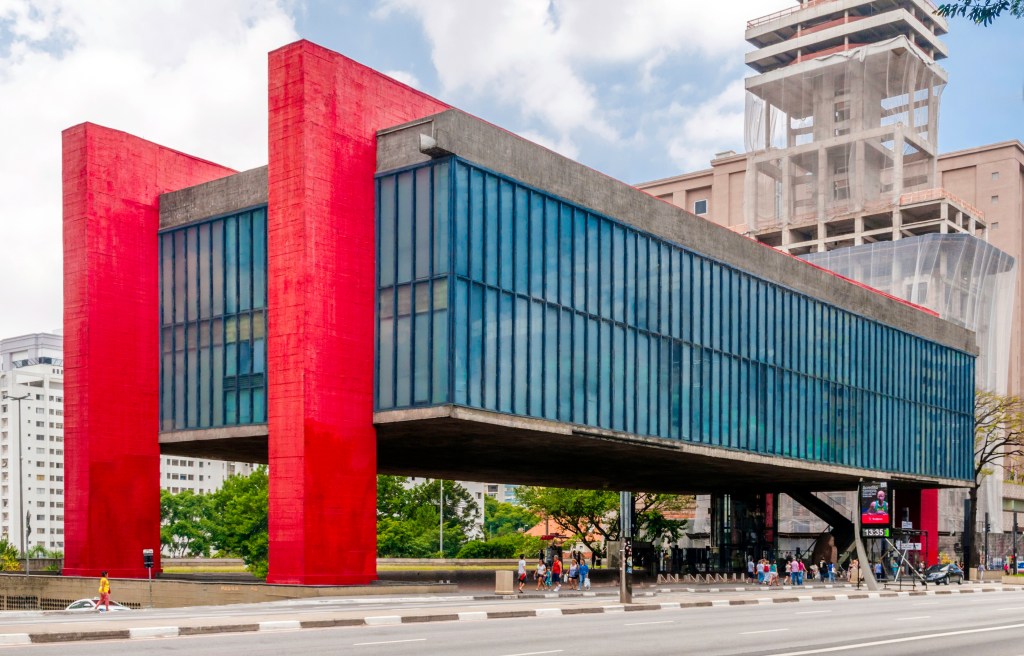
Avec les œuvres amenées d’Italie, Bardi organisa une Exposition de Peinture Italienne Moderne au cours de laquelle il rencontra le journaliste Assis Chateaubriand qui avait en projet la construction d’un musée d’art moderne : le Musée d’Art de São Paulo. Chateaubriand proposa à Bardi de diriger le futur musée ce que Bardi accepta. Sa femme Lina fut chargée de l’architecture du musée. Il occupa cette charge de 1947 à 1996. En parallèle il maintint son activité d’essayiste, de critique et d’historien de l’art, d’expert de galeriste et de marchand d’art.
From the Tyrannical Intellect of the Architect to the Good Taste of the Industrial Designer
As a curator and architecture critic in 1930s Italy, P. M. Bardi advocated a radical Rationalist architectural aesthetic for the new fascist metropolis, the emergent fascist nation. The Italian Movement for Rationalist Architecture (MIAR) was a variation of International Style in the vein of Le Corbusier and the Congrès International d’Architecture Moderne (CIAM).[10] Rejecting the ornamentation and use of traditional materials—e.g., marble—that characterized eclecticism and neoclassicism, Italy’s Rationalist architects favored clean geometries, industrial materials such as glass and concrete, and functionalist principles. Throughout the 1930s, Bardi argued for the alliance of Rationalist architecture and fascist politics in the pages of the Milan newspaper L’Ambrosiano, in the architecture journal Quadrante (which he cofounded in 1933 and edited until 1936), and in the Rome newspaper Meridiano.[11] However, Bardi’s justifications for the marriage of Rationalism and fascism underwent some shifts throughout this period. At first, the revolutionary aesthetic character of Rationalism was seen as wholly consonant with the revolutionary political character of Italian fascism.[12] Limitless Museum: P. M. Bardi’s Aesthetic Reeducation Pietro Maria Bardi, Quadrante, and the Architecture of Fascist Italy Pietro Maria Bardi, o crítico de arte que dirigiu por quase 50 anos o MASP Pietro Maria Bardi: o italiano que criou o Masp Pietro Maria Bardi: curiosidades sobre o jornalista e colecionador de arte PIETRO MARIA BARDI – THE VICARIOUS ARCHITECT: THE IMPORTATION OF ITALIAN FUTURISM TO BRAZILMASP – museu laboratório: museu e cidade em Pietro Maria BardiSão Paulo Museum of Art
Professor Lionello Venturi com Pietro Maria Bardi em visita ao MASP em 1960
Por dentro do maior e mais importante museu de arte da américa latina. Neste, mostro as principais obras do museu.
Descobri esse arquiteto que trabalha com luz externa nesses espaços. Uma abordagem de vanguarda para Brasil. (Interview by Youri Messen-Jaschin – french version)
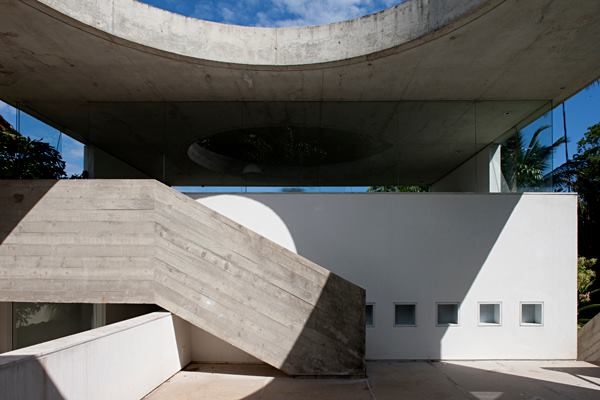
Decio Tozzi (São Paulo, 1936). Arquiteto. Ingressa na Faculdade de Arquitetura e Urbanismo da Universidade Presbiteriana Mackenzie (FAU/Mackenzie) em 1956, formando-se em 1960. Durante o curso, vence o concurso para a Casa do Paraplégico, em apoio a campanha beneficente liderada, por Gregori Warchavchik (1896-1972) entre outros. O projeto, desenvolvido sob a orientação do arquiteto russo, é premiado no 8º Salão de Arte Moderna de São Paulo de 1959, com menção honrosa. Em 1962, funda o escritório Decio Tozzi Arquitetura e Urbanismo, recebendo prêmios no Salão de Arte Moderna de São Paulo e na Bienal Internacional de São Paulo. Pelo conjunto da obra, conquista os prêmios Rino Levi, do Instituto de Arquitetos do Brasil (IAB), de 1971, e o conferido em 1976 na Exposição Nacional de Arquitetura do 9º Congresso Brasileiro de Arquitetos.
Além da prática, dedica-se à atividade docente e de pesquisa. De 1962 a 1964, dá aulas de projeto na FAU/Mackenzie. Em 1967, passa no concurso para professor da Faculdade de Arquitetura e Urbanismo da Universidade de São Paulo (FAU/USP), mas assume o cargo apenas em 1981, ministrando as disciplinas Trabalho de Graduação Integrado (TGI) e projeto até 1983 e 1994, respectivamente. Na década anterior, em 1972, é contratado pela Faculdade de Arquitetura e Urbanismo da Universidade Católica de Santos (FAU/Santos), também como professor de projeto, permanecendo no cargo até 1983. Durante esse período, realiza a dissertação de mestrado, Leitura de um Período de Produção: Obra do Arquiteto Decio Tozzi 1960/1980, defendida em 1981. Participa do departamento paulista do IAB como membro da diretoria no biênio 1970-1971 e 2º vice-presidente na gestão 2004-2005. Projeta o Parque Villa-Lobos (1994), em São Paulo e, em seu livro Arquiteto Decio Tozzi (1995), apresenta seus principais trabalhos. https://www.archdaily.com.br/br/tag/decio-tozzi
Unusual encounter from my trip to Brazil the 26.01.1988 I one of the greatest world architect: ## OSCAR NIEMEYER ## friends of Le Corbusier, met in his office in Ipanema – Rio de Janeiro I 5 December 2012 – unfortunately deceased..
Oscar Ribeiro de Almeida Niemeyer Soares Filho (December 15, 1907 – December 5, 2012), known as Oscar Niemeyer (Brazilian Portuguese: was a Brazilian architect considered to be one of the key figures in the development of modern architecture. Niemeyer was best known for his design of civic buildings for Brasília, a planned city that became Brazil’s capital in 1960, as well as his collaboration with other architects on the headquarters of the United Nations in New York. His exploration of the aesthetic possibilities of reinforced concrete was highly influential in the late 20th and early 21st centuries.
Both lauded and criticized for being a “sculptor of monuments”,Niemeyer was hailed as a great artist and one of the greatest architects of his generation by his supporters. He said his architecture was strongly influenced by Le Corbusier, but in an interview, assured that this “didn’t prevent [his] architecture from going in a different direction”. Niemeyer was most famous for his use of abstract forms and curves an wrote in his memoirs.
Early career…
After graduating, he worked in his father’s typography house. Even though he was not financially stable, he insisted on working in the architecture studio of Lúcio Costa, Gregori Warchavchik and Carlos Leão, even though they could not pay him. Niemeyer joined them as a draftsman, an art that he mastered (Corbusier himself would later compliment Niemeyer’s ‘beautiful perspectives’[10]). The contact with Costa would be extremely important to Niemeyer’s maturation. Costa, after an initial flirtation with the Neocolonial movement, realized that the advances of the International Style in Europe were the way forward for architecture. His writings on the insights that could unite Brazil’s traditional colonial architecture (such as that in Olinda) with modernist principles would be the basis of the architecture that he and his contemporaries, such as Affonso Eduardo Reidy, would later realize.
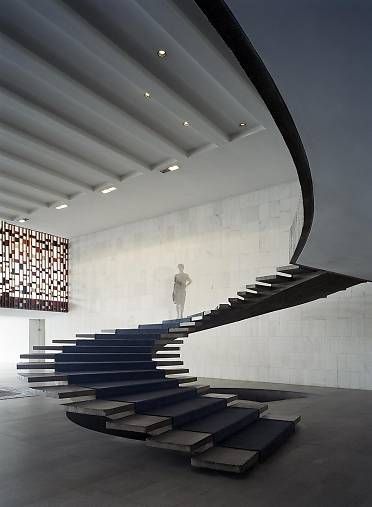
In 1936, at 29, Lúcio Costa was appointed by Education Minister Gustavo Capanema to design the new headquarters of the Ministry of Education and Health in Rio de Janeiro. Costa himself, although open to change, was unsure of how to proceed. He assembled a group of young architects (Carlos Leão, Affonso Eduardo Reidy, Jorge Moreira and Ernani Vasconcellos) to design the building. He also insisted that Le Corbusier himself should be invited as a consultant. Though Niemeyer was not initially part of the team, Costa agreed to accept him after Niemeyer insisted. During the period of Le Corbusier’s stay in Rio, he was appointed to help the master with his drafts, which allowed him a close contact with the Swiss. After his departure, Niemeyer’s significant changes to Corbusier’s scheme impressed Costa, who allowed him to progressively take charge of the project, of which he assumed leadership in 1939.






 Art * Music* Architecture * Sciences * Cinema * Theater * Cirque * Forain *